
By Sujan Pariyar
Senior Writer
Published: April 10, 2026 | Last Updated: April 10, 2026
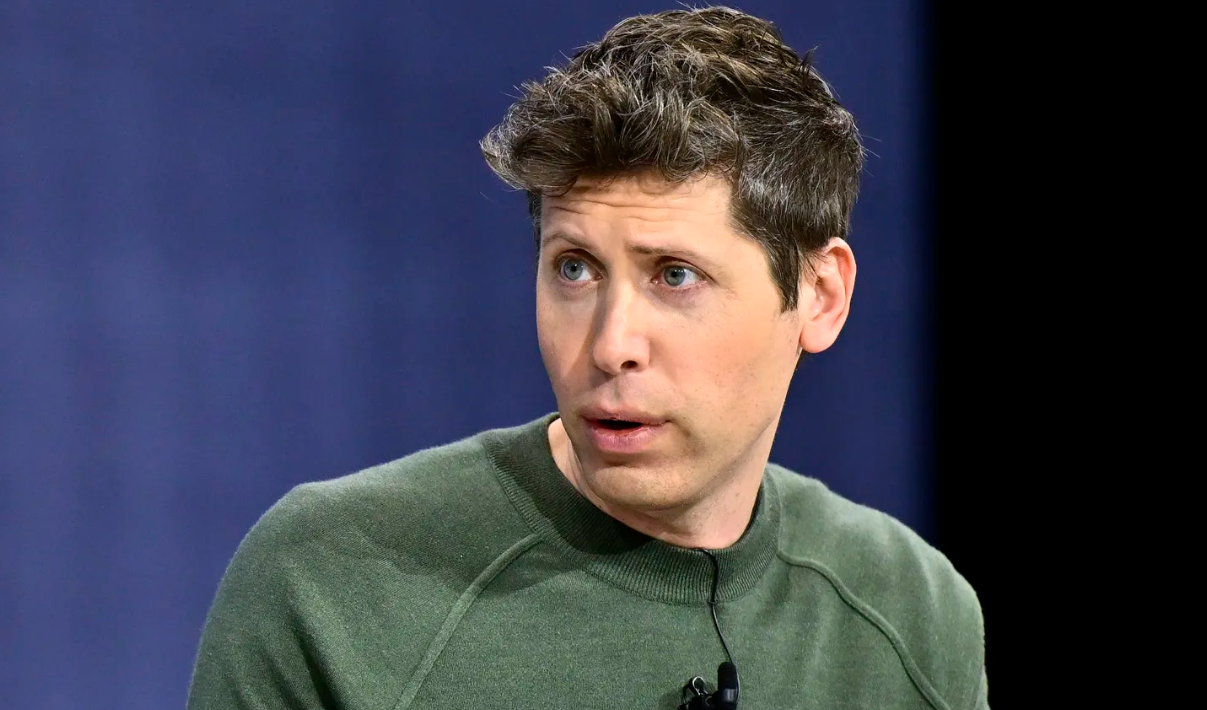
In the leaked OpenAI cap table that surfaced in early April 2026, one line stands out more than any valuation figure or investor return: Sam Altman – 0% – None/Pending.
At a company now valued at $852 billion post a record $122 billion funding round, the CEO who has become the public face of the AI revolution holds literally zero equity. No shares. No options granted. No “founder’s carve-out.” This is not an oversight — it is a deliberate, decade-long choice rooted in OpenAI’s original nonprofit DNA, reinforced through the October 2025 restructuring into OpenAI Group PBC.
This article delivers the most comprehensive examination yet of Altman’s zero-equity position: the historical context, his own public explanations, governance mechanics, investor reactions, legal tensions, and what it signals for OpenAI’s anticipated 2026 IPO. For the complete ownership picture and full cap table, see our guide: Who Owns OpenAI.
For investor-by-investor returns at the current valuation, read: OpenAI Cap Table 2026: Full Breakdown of Investors, Stakes & Returns at $852 Billion Valuation.
The Official Cap Table Reality (April 2026)
According to the reconstructed cap table first reported by The VC Corner and Forbes on April 2, 2026, Altman’s row simply reads “None/Pending.”
- Microsoft: 26.79% (~$228.3 billion)
- OpenAI Foundation (nonprofit): 25.80% (~$219.8 billion at zero cost basis)
- SoftBank: 11.66% (~$99.3 billion)
- Employees & former employees: ~19–20%
- Sam Altman: 0%
This structure was locked in during the October 28, 2025 recapitalization when the for-profit LLC became OpenAI Group PBC (a Public Benefit Corporation) and the nonprofit was renamed the OpenAI Foundation. Official confirmation appears on OpenAI’s structure page.
Why Sam Altman Owns Zero Equity: The Full Story
Altman has addressed the issue multiple times. In a detailed October 2025 X thread, he wrote: “It was a crazy tone-deaf thing to try to make the point ‘I already have enough money.’ … I think it would have led to far fewer conspiracy theories.” He added that he now wishes he had taken equity “a long time ago.”
The original rationale dates back to OpenAI’s 2015 founding as a pure nonprofit. The board required a majority of “disinterested” directors with no financial stake to safeguard the mission of ensuring AGI benefits all humanity. Altman, as a board member and later CEO, voluntarily forwent equity to preserve that independence.
Even after the 2019 capped-profit subsidiary and the 2025 full PBC transition, the Foundation retained 100% board appointment rights. Granting Altman a large stake (rumors once floated 7%) would have required renegotiating governance with Microsoft, employees, and regulators in Delaware and California. The board — still controlled by the Foundation — has left the line as “Pending.”
Altman’s compensation remains salary-based (reportedly modest by Silicon Valley standards, around $76,000 base in prior years plus performance bonuses). He has described the role as his “childhood dream job,” prioritizing influence over personal wealth.
Timeline of OpenAI Structure & Altman’s Equity Decisions (2015–2026)
| Year | Event | Altman Equity Impact | Key Governance Change |
|---|---|---|---|
| 2015 | OpenAI founded as nonprofit | 0% (disinterested director rule) | Nonprofit board control |
| 2019 | Capped-profit LLC created | Remains 0% | Microsoft $1B+ investment |
| Nov 2023 | Board drama: Altman briefly ousted | No change | Reinforced mission-first board |
| Oct 2025 | PBC restructuring completed | Still 0% (“None/Pending”) | Foundation gets 26% equity + full board control |
| Mar 2026 | $122B round closes at $852B valuation | Remains 0% | Leaked cap table confirms status |
| April 2026 | Musk lawsuit trial approaches | Pending decision | Ongoing scrutiny of governance |
Governance Anomaly: Nonprofit Control vs. CEO Influence
The OpenAI Foundation’s 25.8% economic stake paired with 100% board control is the true power center. It can appoint or remove every PBC director at will. Microsoft, despite its larger 26.79% stake and $13 billion invested, has zero board seats. Its influence flows through Azure contracts and revenue-sharing through 2032, not voting rights.
This decoupling of economics from control is rare — even compared to other AI labs. Anthropic’s Dario Amodei and Daniela Amodei hold meaningful equity through their roles. Elon Musk at xAI owns a substantial founder stake. Altman’s zero-equity setup continues to fuel debate: Does it protect the mission, or create misalignment now that OpenAI is a commercial powerhouse generating $25 billion ARR?
Investor, Employee & Market Reactions
- Early VCs & Angels: Some privately express frustration that the CEO who recruited them has no skin in the game, yet the structure has delivered 30x–140x returns for them.
- Employees: The generous RSU pool (~19–20%) has created hundreds of paper millionaires and billionaires. Many view Altman’s stance as consistent with the mission-first culture that attracted them.
- Wall Street & IPO Preparations: Analysts note that a public-company CEO with zero equity is unprecedented at this scale. Altman himself said on the Big Technology Podcast in late 2025: “Am I excited to be a public company CEO? 0%.” He acknowledged an IPO is likely necessary but called it “really annoying” in some ways.
The Foundation has already begun deploying its windfall: leadership appointments announced March 24, 2026, with commitments of at least $1 billion in 2026 alone for open-source health datasets, AI resilience research, and global access initiatives — turning the $219.8 billion paper endowment into real-world impact.
Legal & Regulatory Context
Elon Musk’s ongoing lawsuit (trial set for April 27, 2026) alleges the restructuring breached the original nonprofit mission. California and Delaware attorneys general approved the PBC conversion but continue monitoring. Altman’s zero-equity status has been cited by both sides as evidence of (or protection against) conflicts of interest.
What Happens Next? Scenarios for 2026–2027
- Pre-IPO Grant: The Foundation board could approve a meaningful equity package (5–10%) as part of IPO preparations to align incentives and quiet criticism.
- Status Quo: Altman continues with salary + bonus, reinforcing the “mission over money” narrative.
- Post-IPO Compensation: Equity arrives via standard executive packages once public.
Whatever the decision, it will be one of the most closely watched corporate governance moves in tech history.
Frequently Asked Questions (FAQ)
A: Yes. The leaked cap table lists him as “None/Pending” with 0% ownership.
A: Originally to maintain a disinterested board under the nonprofit structure; later to avoid conflicts and signal commitment to the mission.
A: It remains undecided. The Foundation board controls any grant.
A: Highly unusual. Most founder-CEOs at comparable valuations hold 5–20%+ stakes.
A: The massive employee pool and mission-driven culture appear to have offset concerns so far.
Conclusion
Sam Altman’s zero-equity position is not a bug in OpenAI’s cap table — it is a feature of its audacious experiment in mission-protected capitalism. At $852 billion, with the nonprofit sitting on a $220 billion endowment and Microsoft reaping 17.6x returns, the structure continues to deliver extraordinary results while sparking necessary debate about incentives, control, and the future of AGI.
As OpenAI marches toward potential public markets, Altman’s stake decision will test whether a leader can wield immense influence without traditional ownership. We will update this analysis with any new developments, board announcements, or IPO filings.
Sources: Official OpenAI “Our Structure” page (October 28, 2025), Forbes & The VC Corner cap table analysis (April 2, 2026), Altman X thread (October 2025), Big Technology Podcast (December 2025), Reuters, CNBC, Bloomberg, and Delaware/California regulatory filings. This is not financial or legal advice. All figures based on publicly reported and leaked data as of April 10, 2026.




Be First to Comment